Archive: December, 2025
2025 Review
posted by Jeff | Wednesday, December 31, 2025, 12:01 AM | comments: 0Well, that was a year. The highs were high, the lows were low. I feel like I've aged several years. It wasn't all bad, but I have to really think carefully to remember the good parts. So without further rambling, here are the usual things.
The hobby business
Meh, I'm not sure why I even bother writing about this, except that I've been at it for 26 years. It's the usual thing, with more traffic and less revenue. After a relatively minor but positive correction last year, Google revenue fell off a cliff. Total revenue was down 38%, but traffic to PointBuzz was up 9%, and CoasterBuzz was up a staggering 45%. Despite AI summaries, something in the search algorithms benefitted the sites. But the revenue per page view was almost half of what it was last year.
I've complained for years about the Google monopoly for display ads, and a judge finally declared them as such. But it's unclear what the remedies will be, and if they're useful.
Obviously there has to be other ways for independent publishers to make money, and there are. But the reason I got away with this for as long as I did was because it was mostly passive in nature. I didn't really have to do anything, I just had to pay for the expenses related to hosting. Those, by the way, were down a little, as some of the things that I use got slightly cheaper (search, caching). So the joy these days comes from having no down time, and average page response times under 15ms. And to be clear, that feels very good.
Career
Here I am about to celebrate a four-year anniversary, which is pretty crazy. Again, my previous record at tech companies is two and a half years. I stay because the problems are interesting, and frankly, the company has been stable enough to keep at it. There is no investor drama or private equity (that I'm aware of, but it's a public company). I also really like my team. I've had mostly the same team the entire time I've been there, which is pretty unusual. The year started off very difficult, with a lot of change, but it eventually moderated into stable routine.
I'd like to think that I'm a pretty solid technical manager, though I'm still learning. I still have blind spots, and between ASD and being remote, those can be frustrating. I learn from them though. One of the biggest challenges is that when I suggest things, or technical direction, they're often viewed as, "Do this," instead of, "Do this if it (and I) make sense." I assume that because I have no filter, others don't, and would tell me if my suggestion is dumb. Regardless, I still learn into servant leadership and do my best to enable the team. That definitely results in the best work.
Last year I mentioned how I would like to pursue theatrical and performance lighting as a third act of sorts, and I did make some strides there. I took down the lighting rig from my office (to make room for the pinball machine), but I spent a lot of time in Vectorworks designing rigs and such. I haven't used those rigs virtually, as much as I would like, and I feel like I might have to relearn some of the console programming. The long and short of it is that I know more than I did a year ago, but I'm not sure how or when I'll apply that knowledge.
Making stuff
I edited exactly none of my documentary, as that footage approaches three years. It hangs over my head, having spent all of the money on the production part, only to not follow through and cut it. But I think about it a lot, and I'm hoping that I get back to it. Hope is not a strategy, I know.
As I said though, I did spend a lot of time on the lighting stuff, and I ended the year with a big Gigi-Garbage-inspired virtual rig to mess with. Her show for the Garbage tour this year was fantastic and inspiring. She didn't have a ridiculous number of fixtures or anything, but she put them to great use with some great looks. The one thing that I wish existed was a good visualizer that was free and/or cheap. Vectorworks actually comes with one, but that's too expensive to license relative to the time I spend using it. Last year there was a great Black Friday deal.
Meanwhile, I did recreationally get back to coding a bit. My forum release this year didn't have much to it, but I subscribed to the low end Claude Code AI agent, and it's been a lot of fun to use. You still need solid dev experience to check its work, but a lot of more mundane work is easy to generate. I went back to that "social" app I was working on, and cranked out a bunch of stuff that was less tedious. Totally worth the $20 a month. I work on it in spurts, and mostly because I want a social-like app to post stuff to for my own amusement, now that Facebook banned my account (more on that later).
While not exactly making something, there was one other thing I was after that didn't work out. I didn't write about this before, but I had committed to coaching a club volleyball team last summer. We went through the tryouts and everything, and just as it went down in Seattle, they couldn't make up enough teams for me to coach one. Kids wanted the less experienced coach that they knew, or they wouldn't sign. So once again, I almost coached.
Health
Nothing has really changed since last year regarding my physical health. Triglycerides are still high despite historic low cholesterol. Among the causes for this could be weight or my hypothyroidism. In the latter case, my levothyroxine dosage is low relative to my weight, even though it gets the hormone levels correct. I pointed this out to my doctor, and she blew it off. So I decided that I'm going to switch doctors. I feel like she's trying to check the boxes to make the lab numbers work, and while I appreciate that it has mostly worked, I think it's time for another opinion.
Meanwhile, I still haven't seen an eye doctor, even though I know I need reading glasses, especially later at night. This is actually fascinating to me, the way that aging affects the eyes. It's called presbyopia. Despite inheriting genes from parents with very poor eyesight, mine has been solid for fifty years. If I'm reading the Internets right, it seems like it's not the shape of my eye that has changed necessarily (though obvious a doctor would have to determine this), but it's more the mechanics of the eye and how it focuses. As the day goes on, my minimum focus distance increases, presumably from fatigue. I start at about maybe 16 inches away, but as the day goes on, the distance and brightness requirement increases. The brightness makes sense to this photographer. When you "stop down" the aperture (iris), the depth of field gets smaller. Fortunately this phenomenon seems limited to near-sight, because everything at a distance is sharp even at night.
I'm still taking medical marijuana (gummies) at night. The 5mg of THC is still plenty to make me tired and reduce the brain spiral. It seems to keep away restless legs, too. It doesn't work quite as well for the sleep, but 10mg still makes it harder to wakeup. That's kind of a last resort. It looks like they're changing the classification of weed, so it can be researched more. I hope that's the case.
My mental health has been challenging this year, but I can't easily narrow it down to why. It's been a mix of parenting, reconciling mortality and trying to identify purpose. I feel like I should be an artist, or doing something that makes people happy. A large part of it is just the state of the world, which I'll get to later. Hate, mistrust and violence are everywhere, when it felt like we were going the away from it for so long. And when you consider the ephemeral nature of our lives, you wonder why that's what people choose to lean into.
Parenting
This was the hardest year we've had, I think, and yet, it came with some serious wins. We weren't sure if Simon was going to actually pass grade nine, even in April, but he got through it. The start of high school was a disaster, and ironically I think the things in place to accommodate neurodivergence were a lot of the problem. In a school with 3k+ kids, he was not set up for success. But the biggest problem was that the accommodations and IEP lacked accountability. He always had an "out" for anything that even made him uncomfortable. Even in the place where you'd expect "weird" kids to find their people, the theater, he was largely cast out, and the teacher was a lot of the problem.
As that school year was winding down, we learned of a very small school in the district where he might be able to thrive. There's less homework, and the volume of individual attention is extraordinary. It was a relief when we finally learned that he was in, but we didn't know what to expect. The social aspects have still been difficult, but he has been far more self-sufficient, especially with biology and geometry. All of those diagnostics that kept telling us that there was a smart kid in there turned out to be true. He's getting A's and B's, not because any of it is "easier," but because he actually knows the things. He just needed the space where teachers could figure him out.
Things at home have been tough, in part because his therapist thinks he might have oppositional defiant disorder. That's what it sounds like, that his natural instinct is to defy everything that you ask him to do. That sounds like just being a teenager, but I get it. Instruction to him seems like a personal attack, which is a bummer. We've had some serious shouting matches, which sucks, because it's so hard to try and stay above that. I think he sees his relationship with us as transactional, but not realizing that we pay for everything, and his end of the bargain is to just do as we ask. He has these moments later where he realizes the harm he's doing to relationships, but it doesn't translate to change in the moment.
In addition to some autonomy with school work, if not the level we'd like, his free-ranging activities that began on the cruise ships at age 9 have expanded to solo theme park visits. We did one of our biennial staycations at Disney around my birthday, and allowed him to bus to whatever park he wanted while we did adult dining and stuff. He was responsible and returned at the times we asked. He would like to do it more with us, but we're less about doing all of the attractions than we are eating, drinking and seeing entertainment. So this isn't quite a social opportunity, but it gets him away from the computer.
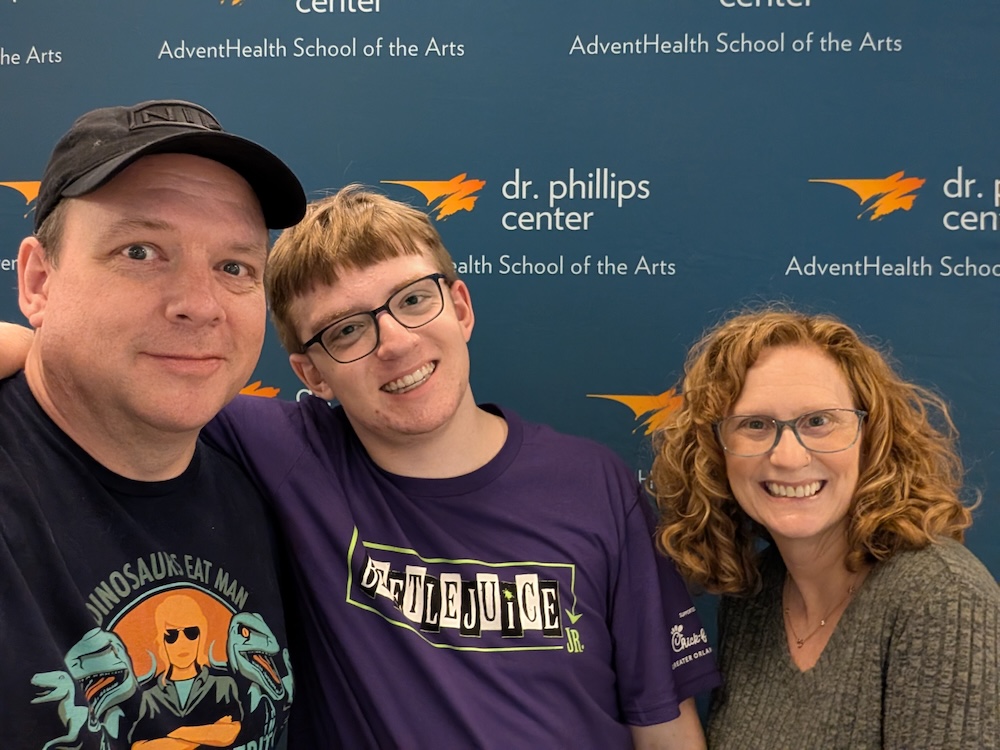
Diana enrolled Simon in a tech theater workshop that ended in a week of rehearsals and performances of Beetlejuice Jr., and it was a huge success. Unlike the shitty experience with the shitty teacher last school year, here he was led by professionals and a working part of the crew. I can't think of anything this year that was as big of a win as this. It gave him belonging and purpose, as well as responsibility.
Cats
This isn't usually a top onto itself, but the loss of Finn this year was pretty devastating. Just seeing pictures of him makes me sad. I can't really put in words what a great personality he was. He wasn't really a big cuddler most of the time, but definitely "lap adjacent." His brother Poe fortunately has similar qualities, including the "flop and stretch," a demand for belly rubs.
We foster a lot of cats, but none of them have been "keepers." They blunt the pain of losing Finn to an extent though. We have a couple of girls right now that are particularly charming, but I don't think they're a good fit. They're little, but total badasses toward Remy, which I assume would get worse when they get larger. That seems karmic, given his bullying of Finn, but it's a warning sign. Maybe Remy is actually the problem, but he's not going anywhere. I think what I'm looking for is a kitten that fully takes to Poe, and Poe is willing to "adopt." I know it's projection, but I hate that he lost his bro.
Travel and entertainment
After a work trip to Denver, we started the year entertaining a guest from... all over. Our Estonian friend Kairi, chosen family, spent a few days with us on her way to New Zealand to work at a ski resort. That felt like a vacation, because we did all of our favorite things with her, including a Broadway show (Mamma Mia!), eating, drinking and having many great conversations. I imagine that it felt a lot like vacation because of that last part, which on cruises involves meeting a lot of great people from all over the world. That's appropriate I guess, since we first met her on a cruise.
Speaking of which, some people collect states in travel (35 for me), but what I'm after is 50 cruises, for no other reason than to get our name on a sign board on Castaway Cay. So we did four this year, which puts our count at 33. They were on three different ships, too, including the new Treasure, which started doing the Caribbean itineraries this year. Those ports aren't really that interesting to me, but that ship is gorgeous. The decor, design and theme is next level. Simon was particularly fond of the Haunted Mansion bar, where one of our bartender friends from two previous cruises was working. We also did a few days on the Fantasy, which was very much needed after Finn and serious school difficulties. We reunited with the bartender who made us cocktail enthusiasts seven years ago. Two weekenders on the Wish rounded out the year.
Beyond the cruises, we stayed put in town, but I think we did a better job of utilizing our Disney passes. Didn't get to the Food & Wine Festival enough, but still made many appearances. In July, as I mentioned, we stayed at Coronado Springs. It was a pretty rainy week, so Diana and I skipped the parks a bit while Simon did his thing. But the resort has three of our favorite spots, including the Three Bridges tapas and sangria spot, the Toledo restaurant which is amazing, and the Dahlia Lounge. Collectively, these are the most cruise-like experiences, at a fraction of the cost. After much waiting, we finally got a reservation for Geo-82, the bougie new bar behind Spaceship Earth. It ain't cheap, but it's the kind of high-end experience that's fun to do from time to time.
The year in the theater was mixed, because last season was a lot of "meh" jukebox shows, representing the gap in development caused by the pandemic. But outside of that, we saw so many great things. We saw the OPO perform the Jurassic Park score to the movie in Steinmetz Hall, which was borderline life changing. Just seeing it with an audience was special. A few months later we saw them do a John Williams set. We saw Alan Cumming in Judson's. We saw Kevin Smith do a Q&A after showing Dogma. Garbage played Hard Rock on what may be their last headlining tour. We saw Joss Stone, and Lindsey Stirling returned for her Christmas tour. It was a great year for live music. We also saw "lesbiana blanco" Kristin Key, and in the Walt Disney Theater we saw John Mulaney.
In addition to the aforementioned Mamma Mia!, we had A Beautiful Noise, which I had to skip because I was sick, MJ, which was entertaining as hell but glosses over Michael's adult weirdness, Mean Girls, which was a stripped down version of what we saw on the first tour, The Lion King, which I've seen I think three other times but love it, Stomp, which did not impress me, and the one truly original show last season, Shucked. I really liked that, even with all of the corny jokes (see what I did there?).
The first half of this season has already been much better. It started with The Wiz, which was more entertaining than I expected, in no small part because the music lends itself to great vocal performances. Water For Elephants wasn't bad, though the music didn't really grab me. Hadestown came back, and despite being a non-Equity show, featured some outstanding performances. It will always be one of my favorite shows. Just last week we had The Outsiders, which was the kind of performance and stagecraft you wish every show had. It was so good.
We saw 20 shows/concerts/comedians this year. We don't have particularly nice "things," but I'd rather have the shows.
Oh, and it's worth noting that we bought a pinball machine. I believe we've clocked in over 2,000 games on it so far, in just over two months. It's Stern Pinball's Star Wars: Fall Of The Empire, and it's been a great opportunity for us to hang out and play together. I've been wanting to pull the trigger on a "new in box" machine for years, but just didn't want to spend the money. I was apprehensive, and still am, but I saved my pennies and it has been totally worth it.
Fiscal condition
It was another good year for saving. Diana working full time has fundamentally changed how much we're able to put away. On top of that, she's diligent about figuring out the most economical ways to buy things that we need. We also got through a year without any serious unexpected expenses, which we haven't enjoyed in many years. Once again, our biggest line item that came close was HVAC repairs, but instead of replacing the whole downstairs system, we band-aided it. It's annual run time is a fraction of the upstairs unit, so I'm crossing my fingers that it'll hold up until we leave this place.
Next year is going to be trickier. Part of the reason I'm saving the way that I am is I plan to buy a car. Simon will be of driving age, and I think that having reliable transportation is key to his transition into adulthood, whatever that looks like. I don't look forward to the insurance cost. I don't know what specifically I'll do, but what I'm leaning toward is gifting my car to him. It'll be over five years old, but it has new tires and less than 30,000 miles. I'll get something for me, with so many (better) choices now available among electric cars. Or I could buy him a used Leaf and keep mine, but I kinda hate my car and all of the rattles and squeaks it makes. That first year for the Model Y was crap in terms of build quality. At least the drive train is solid.
I'll be honest, I'm worried about the markets, and their irrational exuberance. There's an AI bubble in tech, for sure, inflation is getting worse, unemployment is ticking up, and a lunatic is in the White House. I fully expect everything that I've invested to shrink in value at some point, and all I can do is hope that it's temporary.
World outlook
I don't even know where to start. People are mean and outwardly racist (homophobic, antisemitic, religiously bigoted, etc.) now, with little consequence. No one cares anymore about genocide in Gaza, or war in Ukraine. We have a bizarre white nationalist movement in the name of Christianity, with principles that are the opposite of those practiced by Christ. The government is actively cutting off resources for disabled people because apparently that's "woke" (which I'm pretty sure just means "being kind"). There's not a lot of reason to be optimistic.
I can't relate to people who expend so much energy toward hate, and the associated stupidity. Do they realize how little time they really have?
So while I don't entirely recognize the world right now, I have to be optimistic. I said the same thing last year. I can only keep being curious, interested and in awe of what the universe is. It's like the thing in Hadestown, where Orpheus could make you see how the world could be, in spite of the way that it is. It's optimism in the face of tragedy. I like that.
Am I content?
Yes, mostly. As frustrated as I may be with the world, I continue to benefit from the birth lottery and a number of choices that happened to make me comfortable. Something could change in the blink of an eye, and understanding that incentivizes making the most of things, to the extent that we can. Sure, there are days that I just find it hard to deal with life. Everyone is entitled to bad days. I just have to avoid wallowing in them.
2025 Playlist
posted by Jeff | Tuesday, December 30, 2025, 1:25 PM | comments: 0What an interesting year this has been. While we lean heavily into singles and one-hit wonders most years, this year was the year of incredible albums. As you likely know, I still buy music, because I like to own it, and I bought a lot of it this year. This playlist reflects the albumness of the year, with two or three songs from many of them.
First off, you can always depend on Glass Animals to crank out some solid singles, and they did. Lydia Night is the former singer of The Regrettes, as she goes for more pop vibes. Franz Ferdinand and Hozier are of course single friendly. Also good to see The Temper Trap back after many years. The first song, "Tired Boy," is such a great 90's alt rock break-up song. Garbage did put out an album, but it didn't grab me the way that others have, so I only included one song here. Wet Leg had impossible odds, and while the album is solid, it's not quite what their debut was. Maybe it was just the sheer volume of other greatness this year.
The year started well with Lady Gaga's MAYHEM. It's definitely one of her better works, though I find many of the songs to be derivative. The two included here are standouts, and there are a few more. I doubt that there's a better entertainer in the world.
Two albums were, start to finish, amazing, with no throw-away songs at all. The first was HAIM's I Quit. We listened the shit out of this album, for months. I remember being into one of their singles ten years ago, but this is peak awesome. It was hard to narrow it down to just three songs. The last one, "Now It's Time," samples U2's "Numb," apparently a trade as U2 used one of their guitar riffs previously. They make it completely their own. All three are musicians, and all three play the drums at various points. It's really great.
And then, beyond all expectations, Wolf Alice put out The Clearing, and it's every bit as good as Blue Weekend. All four of their albums were nominated for the Mercury Prize, a single award for a UK artist. They didn't win, but that's a crazy track record. They're a bit less into the noise and textures of the last album, but it still sounds like them, despite it sounding different. This one is still on frequent rotation. I did not expect them to have two perfect albums in a row, but there it is.
Disney commissioned a soundtrack for Tron: Ares, asking Trent Reznor if he wanted to do it as Nine Inch Nails. Can you believe that Disney wanted to hire the "fuck you like an animal" band? There are only a few songs with lyrics, and they're pretty great. The rest is the kind of atmospheric stuff that you'd find in the middle of a NIN album, but also pretty good. It made the movie, and the roller coaster at Magic Kingdom, better.
We've got another Norwegian album in the mix this year. Last year it was Aurora, this year it's Sigrid. (Surely people have last names in Norway!) I bought her first album a few years ago, but she kind of fell off the radar. This album is Euro-pop perfection. It's a lot more "grown up" than that first one.
Then Hayley Williams comes out of nowhere with a new album. It has 20 songs and it's over an hour. I like the direction that Paramore has been going, getting out of the tired emo thing, but her solo work is also very good. I resisted this one for a bit, because it seemed like all of the press was obsessed with her (AP, Rolling Stone, etc.). But this is the real deal. It's a great alt-pop-rock mix, with a very indie feel.
Overall, it was a solid year for music. The only concerts I got to see this year were Garbage and Joss Stone, but both were so great, as always. What the playlist lacks in quantity definitely makes up for in quality.
I did a YouTube playlist again, if that's your thing.
- "Tired Boy" - Sunday (1994)
- "Too Sweet" - Hozier
- "Hooked" - Franz Ferdinand
- "Disease" - Lady Gaga
- "Abracadabra" - Lady Gaga
- "Time of Your Life" - Bob Moses
- "Pity Party" - Lydia Night
- "Show Pony" - Glass Animals
- "Vampire Bat" - Glass Animals
- "Passion" - Milky Chance
- "Down to be wrong" - HAIM
- "Lucky stars" - HAIM
- "Now it's time" - HAIM
- "catch these fists" - Wet Leg
- "There's No Future In Optimism" - Garbage
- "Thorns" - Wolf Alice
- "Bloom Baby Bloom" - Wolf Alice
- "White Horses" - Wolf Alice
- "As Alive As You Need Me To Be" - Nine Inch Nails
- "Infiltrator" - Nine Inch Nails
- "Shadow Over Me" - Nine Inch Nails
- "Lucky Dimes" - The Temper Trap
- "moody" - Royel Otis
- "I'll Always Be Your Girl" - Sigrid
- "Two Years" - Sigrid
- "Disappearing Man" - Hayley Williams
- "Ego Death At A Bachelorette Party" - Hayley Williams
- "Good Ol' Days" - Hayley Williams
Take the time off
posted by Jeff | Tuesday, December 23, 2025, 3:31 PM | comments: 0I'm rolling into these holiday weeks off from work. I'm also a little burned out. I do this it seems every other year at least. I go four and a half months between significant time off. I think the challenge is that I associate time off with travel, which is hard to do in the fall because of school. With Simon doing better, I suppose we could squeeze in a weekend somewhere, but we didn't know about if that would happen.
It's weird to just have nothing to do, but I welcome it. I'm really embracing being bored, with the hopes that it drives me toward the creative things that I used to do more of. I feel as though life has been imbalanced this last year (and boy, that retrospective blog post is gonna be heavy). I don't really overthink it, but I may in fact underthink it. When I took Simon to therapy last week, I thought about how I have a lot of tools to make sense of things, to balance it all out, but it's so easy to get lost in your own circumstances to do anything with it.
We've got a lot planned for this two weeks. We're getting away, we're going to a wedding, we're volunteering, and you can bet your ass I'm gonna sit around and stare at the sky.
Hot Death Star action
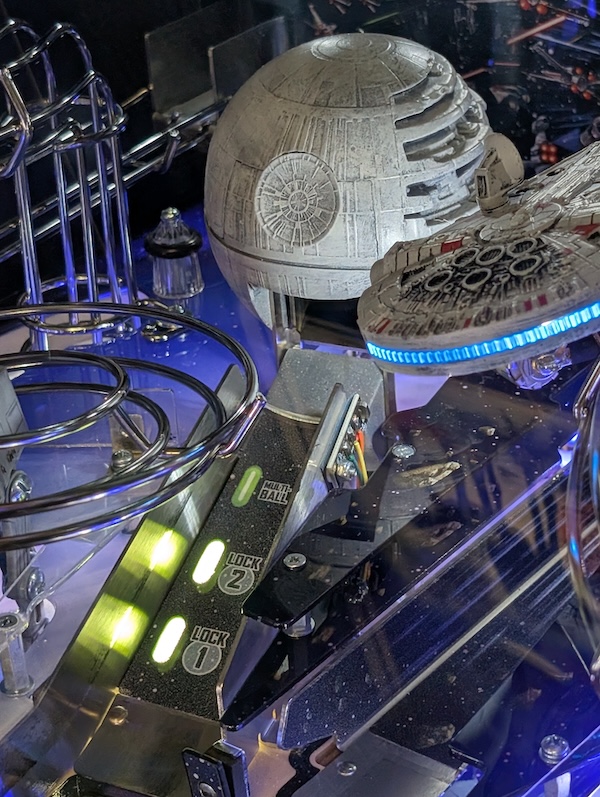
posted by Jeff | Monday, December 22, 2025, 2:01 PM | comments: 0There has been a nagging problem for owners of Stern Pinball's Fall Of The Empire. The Death Star has been extremely difficult to score on. It consists of a steep ramp and internally a tunnel that bends down through the playfield. The idea is that when you lock three balls in there, it starts up a multi-ball experience for lots of points.
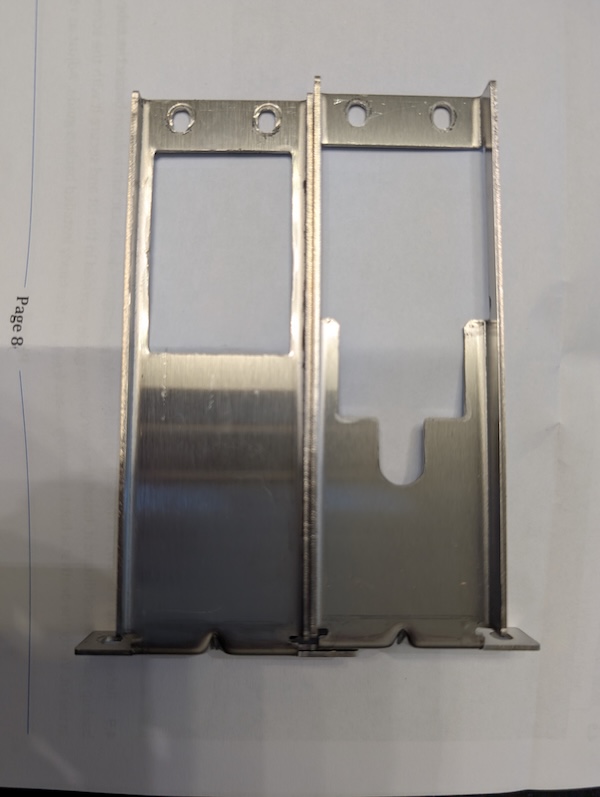
But the frame at the front of the toy, which also guides the door, is too narrow. What mostly happens is that the ball bangs around in there, then comes out. It turns out that I was a little too confident about my "fix" that I made last month, better aligning the ramp and the gate. I managed to score three balls right after I messed with it, so I thought it was good. But as time has gone on, and hundreds of games have been played, I haven't been able to do it again. So Stern shipped out a fix that has a wider gate. In pulling out the old one, I could see that the sides of the frame were starting to wear from ball contact.
After dropping screws and washers into and through the playfield, I eventually got the new frame installed. You have to remove the layers of plastics on both sides to get to it. I left that washer under the one side of the ramp, because I couldn't otherwise get the alignment right. Some folks have had success loosening all of the things and wiggling them around until it aligned, but I couldn't do it without the washer slightly propping up the one side.
We fired up the game, and I scored Death Star multi-ball on my second try. Diana, who has also played hundreds of times, got it within six games. Simon had similar results. So I would say that the fix not only works, it changes the nature of the game. Everyone in the house is more regularly scoring over 100 million, and not just because we've all had a lot of practice.
Good on Stern for sending out the fix, even though it seems like something that should have been caught before they started mass-producing the machines. I don't know how many games they shipped, but I'm sure it's in the hundreds. What a weird thing though, that Stern makes a product intended for commercial use, but a huge portion of their business is for home use. Their support has been pretty good overall, but I've read on the Internet that it isn't consistent. As much as their system architecture has improved to use less wiring, there's still a lot of complexity in there. I imagine though that the people who can afford the machines but don't have the expertise to maintain them can afford to hire experts.
Meanwhile, they keep releasing new software versions, mostly tweaking stuff, but often including new content. We've had three updates in two months. This is another situation where I wish they would have it nailed down before they ship, like the old days, but the changes tend to be incremental improvements. Most of the game is "there" from the start.
Looking out for Poe
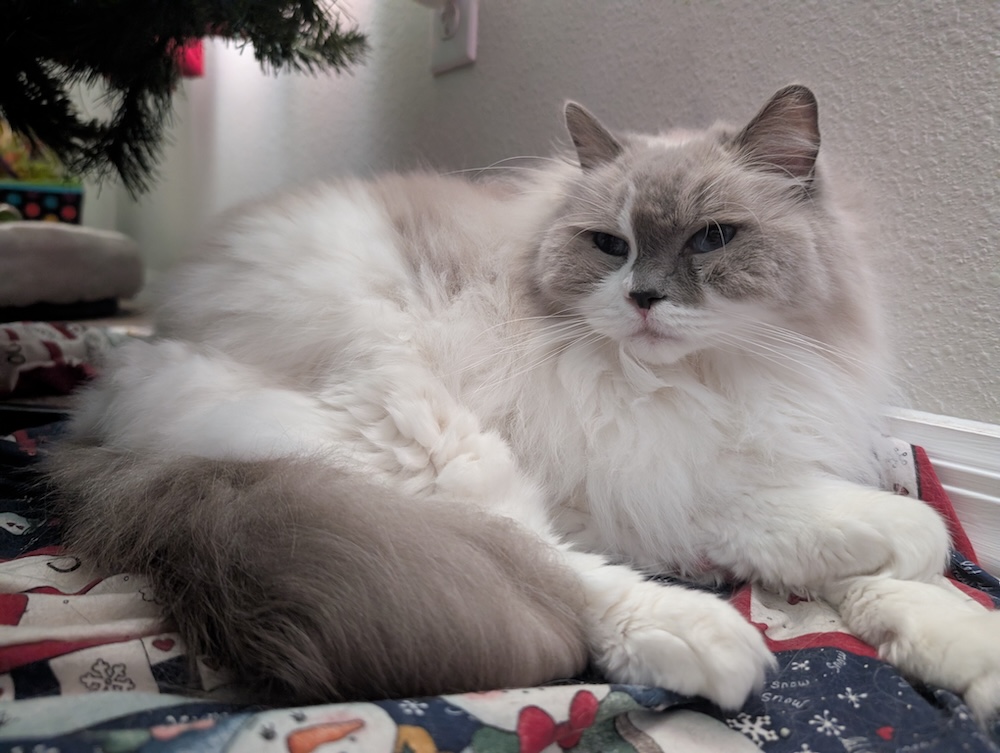
posted by Jeff | Friday, December 19, 2025, 3:00 PM | comments: 0Poe didn't come to breakfast this morning, and we found that he barfed in various places. As you might expect, this triggered alarms for us because we know he probably has FIP, the same thing that killed Finn in March. Fortunately we were able to get him into the vet this morning.
He had a minor fever, but the X-ray showed no fluid in his lungs, no ingestion of foreign objects, and his blood work was clean. The doctor said it could be some kind of low-grade viral or bacterial infection, and gave him a broad-spectrum antibiotic and an anti-inflammatory drug. Basically, he felt that there was nothing to indicate he was in a downward spiral like Finn. He's not lethargic either, and generally responsive to stimuli.
Hopefully it is just something he has to sleep off. He was nutty just yesterday, whereas Finn slowed down and was hiding for a few days. The foster kittens seem to keep checking on him, which is adorable.
The good news is that you can treat FIP with a drug called GS-441524, and remdesivir, which you may know as the COVID-19 drug. Nine months ago, this was just becoming an option, and it was hard to find. Finn was too far along anyway, apparently, so that's why we have to be on top of it for Poe. The efficacy of these new treatments is pretty high, and pretty expensive, but whatever it takes for our furball. It's just important that we watch him closely.
The new world of prototyping with AI
posted by Jeff | Sunday, December 14, 2025, 8:17 PM | comments: 0Coding with AI is definitely a lot of fun, but it sure doesn't require less knowledge. There are countless videos on YouTube showing people "vibe coding" or whatever, but I can guarantee that what they have likely doesn't scale very well, or is perhaps insecure.
ADHD waiting aside, because I was just in the midst of a six-minute wait for some changes I asked for, Claude can do some weird things. For example, I have some backend code that examines the security token and figures out if it's a valid user making the request. It decided to just stub out the user (with userID = 1) instead of actually making sure that it existed. People keep saying that it will get better, but will it? If you look at code out in the world, most of it isn't very good, and the stuff in public is what the AI trains on. I guess we'll see.
I've been working on a prototype for... something that needs a better name than "social network," because I feel like this is something different. It's for me, first and foremost. It's photo journaling and microblogging, which is what socials used to be before they became algorithm driven. It's obviously not something that can exist for free, because cloud stuff isn't free, but what if you could as a paying user invite others to use it in a read-only manner for free? I would pay for that, but who knows if others would.
Hilariously, and representative of my lack of follow-through, I made the first commit to this code more than five years ago. I didn't really revisit it until last summer, briefly, before picking it up again after getting a Claud subscription. I'm tired of messing with the forums, and needed something different. But importantly, I'm doing it for me, with possible (if unlikely) commercial potential. That's what I've always done with the forums, for 25+ years, and I imagine that's why they still exist.
The prototyping, now that I've started it in earnest, goes pretty fast. I'm still trying to find the level at which I'm willing to back off and let the AI leave it in a "good enough" spot. It's not easy, but Claude does a nice job summarizing what it changed and what approach it used. And if I think it sucks, provided I'm committing frequently enough, I can just reverse what it does. For example, that six minutes that I had to wait involved changing six files, adding about 100 lines and deleting 30.
I've got some time off coming soon, and I hope that I can just bury myself in this now and then.
My kid found the theater
posted by Jeff | Sunday, December 14, 2025, 2:15 PM | comments: 0Simon has always been interested in theater tech to some degree, which is to say that he kind of looks through the magic to see the tricks. He does this with theme park rides, too. Last year, for his first year of high school, we were excited that he wanted to take the tech theater class. My experience with theater is that it's always been one of the more welcoming environments for people who can't really find their tribe. Well, that was my hope at least.
But his theater experience in grade 9 was miserable. Part of it was unkind classmates, sure, but the teacher was the biggest problem. She continually marginalized him, even though he wanted desperately to help in every way, even if it was directing traffic in the parking lot on show nights, or being an usher. He wanted to crew the show, but she literally told him, "I'm too worried that you'll be talking backstage and I don't have time to teach you anything." She fancied herself more a for-profit director trying to get awards than a teacher, which triggers me given the college instructors that I had who felt they were "station managers" before educators. We went around with principals and such, but got nowhere. I have an email that felt like discrimination against someone with an IEP, but did not pursue it. Oh, and Diana, former union stage manager, and I, long-time lighting enthusiast and community theater lighting designer, also offered to help from the start, and she never answered. Whatever.
This year, the School of the Arts at Dr. Phillips Center brought in kids to learn and do the tech work for their Beetlejuice Jr. show. We got Simon into it, and while he was reluctant at first, once they got into the theater, and then into tech week, he absolutely loved it. The kids have generally been nice, and the staff has been caring and sensitive to him. He has been surrounded by professionals (not that hack teacher) who share their knowledge and mentor the kids. He found the theater that I thought it could be.
I'm sure he'll be a wreck after the last show tonight, because he's an emotional kid. But I love that he's been able to have the opportunity. It gives him purpose, and gets him out of the house for all good reasons. I hope we can get him into another program like this.
These aren't the cats we're looking for
posted by Jeff | Saturday, December 13, 2025, 11:26 AM | comments: 0Fostering cats can be fun, because it often involves the joy of having kittens without having to actually commit to having them for a dozen-plus years. Sometimes we get much older cats, too, and they can be very sweet. And of course, we're kind of auditioning them to join the pride.
That's how Remy came into the house. Well, there was technically another Remy who was destructive or otherwise not suitable (also all-black). The second Remy seemed better, even though he tried to be a badass toward the ragdolls. It was cute until it wasn't. When he got older, he also got bigger, and he was frequently a dick to Finn. He's still a dick to Poe, but Poe fights back. I wouldn't go as far as to say that Remy was a mistake, but he's never really been a good fit. He'd be better off as an only-cat.
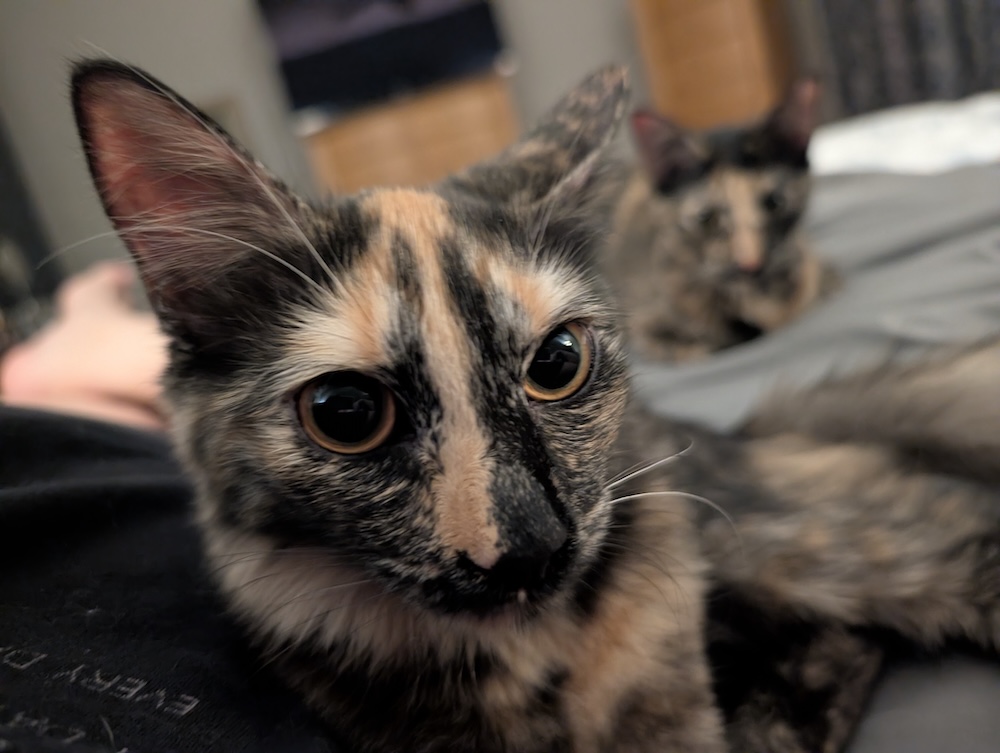
So these two girls spent two weeks with us, then were back in the shelter (they have a spot in a Petsmart), then a week back with us. They've had all of their vaccinations and were fixed, so we let them roam free around the house. They were a joy to have around, and they're very much lap cats. They like being around humans. They're also "talkative" and have interesting personalities.
But there's a reason that we don't give them names, so we don't get attached. These tiny ladies hiss and posture their little faces toward Remy. I know, karma, right? While it's funny now, when they get bigger, I worry about genuine conflict. It's a red flag, and it's a serious bummer. We also would really like to see a cat or two that really warms up to Poe, who sometimes seems a little lost without his bro. Poe seemed recreationally interested in them, and they were recreationally interested in him, but it was not a love fest.
Today we sent them back to the store for the weekly adoption event. I hope they find a good home, because they're very sweet. I'll miss them.
I've still got six hours
posted by Jeff | Monday, December 8, 2025, 6:24 PM | comments: 0We're still two weeks off from the shortest day of the year, but it can't start going the other way soon enough. Tonight I hit 6, and was like, I've got six hours before I'm going to go to bed. That's a long-ass time. So much time for activities!
So what am I doing with that time? I am starting to get back into coding, sort of. Getting an AI subscription has made it fun again because I don't have to deal with the drudgery of stuff that's boring. It also means a lot of waiting around for it to do stuff. Obviously I'm playing a lot of pinball, and my scores are starting to average a lot higher. I'm closing in on my thousandth game on Stern Insider, too, most of which are on our machine. I'm writing more, though not publishing everything, necessarily. Oh, I cranked out a basic lighting rig in Vectorworks right before my subscription ran out, with 50-ish instruments. I'll sit down with that again soon I'm sure. I have a song in mind.
I do feel anti-social to an extent, but I'm very much connecting this to the life of a remote worker. To be fair, we recently went to a show with a friend, we're going to a show this week, and Simon is involved in a theater class that by extension gets me out of the house. And we have lots of plans the rest of the month.
I'm so over early darkness though.
The usefulness of boredom
posted by Jeff | Wednesday, December 3, 2025, 10:27 PM | comments: 0Simon is going through a phase where he says he's bored and wants me to do something with him. This makes sense, because I'm pretty sure that he's outgrowing some of the gaming stuff he was into, as that used to be a primary leisure-time activity for him. But I also find myself telling him that he needs to learn to be bored.
When you're bored, I think it makes you more curious. Being curious leads to new adventures, or at the very least, new interests. Curiosity keeps you learning, too. So in that sense, boredom is a very useful thing. It also gives you time to reflect, gain perspective and rest the mind.
Venturing into social commentary (because where else did you think I would go with this?), I really believe that folks are often incapable of boredom. And yes, it's because of those doom-scrolling devices, or more specifically, anti-social apps. You see it everywhere, even at a place as over-stimulating as a theme park. If there's even the slightest moment of boredom, out come the phones. If you don't see it, you're probably doing the same thing.
Try this: Next time you're waiting for something, or queueing, at the airport or the grocery store, keep your phone in your pocket. Look around, watch people. Observe. If you're really ambitious, try talking to people. If my eye contact-avoiding autistic ass can do it, so can you. I think whatever momentary human connection you have will be far more rewarding than pulling out your dumbphone.
The cure to boredom isn't electronic stuff, it's curiosity.
Cloudy ice is NOT because of "impurities"
posted by Jeff | Wednesday, December 3, 2025, 6:10 PM | comments: 0You know how the Internet can make something untrue fester into alleged fact? This is one of those things, and it drives me nuts.
Getting crystal clear ice is a neat bar trick that is typically achieved by freezing it in a directional manner. It's why ice on the surface of a lake is typically a lot clearer than what you'd find deeper. In your freezer, this can be achieved by putting the water in a deep container that's insulated around the sides, but not the top. If the upper half is separated by small holes, the top bits freeze clear, while the lower part is cloudy.
What almost every words-on-the-Internet say is that this is because it forces the "impurities" to the bottom. This is bullshit. If this were actually true, then the purest of distilled and filtered water would freeze clear in conventional ice cube trays. But it doesn't. Distilled water has effectively no mineral content. The reason has nothing to do with minerals or whatever people claim is in the water. It's because of gases. I imagine it's mostly nitrogen, oxygen and CO2 (i.e., air). It's the air that gets forced down in the directional freezing.
Seriously, every "article" or how-to says it's impurities, but unless you consider air an impurity, it just ain't true.
Why we post
posted by Jeff | Wednesday, December 3, 2025, 2:00 PM | comments: 0I had an interesting conversation with my therapist, relative to my recent involuntary departure from Facebook. After a week of FOMO, I was pretty over it. (Sidebar: She asked if it bothered me about the non-justice of AI enforcement, and you'd think it would grind on me, but I don't really care.) But I told her that I still had an urge to post and/or share whatever happened to be on my mind.
It was her observation that most of her clients likely do it for the usual reasons, as in the likes or comments, the dopamine, or whatever they think it's doing to move the needle on some issue. But I'm a weird outlier (as usual), in that I never did it for any specific audience. This blog is kind of in that category too, in that I don't know who is reading it or why, but I don't really care either. My reason is that writing something down, and making it public or semi-public, allows me to process it and move on. That makes sense given the noise, thought spirals and constant context switching that goes on in my head. For whatever reason, writing composition is something that I can do quickly and clearly, in a way that the thought soup can't do. Making it non-private also, in my way of thinking, forces me to be authentic and honest.
When I see a cool music performance or funny comedy sketch, my first instinct is to share it, so it's a bummer when I can't do that. Oddly enough, if we're going back 15 years, this is the social behavior that social media was supposed to facilitate. Before the algorithms, ads, brands and ephemeral nonsense that fills the screens now. I still believe in this as a concept, I just don't know if there's a business model for it. I think paying something annually for it is the model, but I don't know if it's something that people would actually buy it.
There is another reason to post, which a friend of mine described as scrapbooking. This is where I wish I could have retrieved the data (their export after the fact appears broken), because especially as a parent, it's fun to see what you and your kid were up to ten years back. Sure, it's also an easy way to share the same with friends and family, but to me it's the analog to photo albums, only better annotated and tagged with locations.
I've been coding around software that covers the former scenario a bit, though I imagine it could to the latter. While I'm very much thinking about this for my own amusement, along with a few close friends, I suppose it could be a wider used thing, if they'd pay for it. It's not a complicated thing to build, and it's kinda fun to build, so even if it's just for me it's worth it. Then I can get the thoughts out.
Coding with AI and ADHD
posted by Jeff | Tuesday, December 2, 2025, 6:05 PM | comments: 0So here's a fun thing I've come to realize. Whatever gains I've been able to make by using AI to write code, I lose in the time it takes for it to write code. Stay with me...
When I was coding full-time and not managing, my output was not as voluminous as that of my peers. Now I know that it's because I have ADHD, but at the time, I figured that maybe I was lazy. I now better understand that the then-undiagnosed condition made it hard for me to concentrate on the work, especially if I wasn't able to get into the zone, which I also now understand to be what they call hyperfocus. See also: working in a cubicle office with countless distractions. While I like to think that I wrote quality stuff, it was definitely hard to write as much as others.
Fast forward to today, and I'm mostly writing code for fun on my own time. I've been getting a little deeper into it lately because the AI tools are like having a junior to mid-level developer pairing with you. If you give it the right directions and scope, something that definitely takes some time to learn, the outcomes are pretty OK. But there is a dark side to this as well, and it comes with the whirling icons or messages like "noodling." As text scrolls by and Claude does its thing, the desire to go do something else is overwhelming. The return time for usable code (assuming it compiles) can be at least 30 seconds, which is an eternity for someone with ADHD. I've estimated that in the course of five minutes, my inner dialogue may context shift at least a hundred times. Thirty seconds is a very big window.
I've been unknowingly developing coping skills for ADHD my entire life. When I got the diagnosis four years ago (also ASD), I learned about how neurodivergence forces people to find the shortcuts, the hacks, the compensation for having a brain that's wired differently. But this is the first time since then that I've found something totally new that I'm not used to. And it's crazy that I'm trying to compensate for a machine that's supposed to be helping me!
A lot of this is still right-sizing the work for the AI. When you ask it to take a big swing, it often gets stuff very wrong. But when you model entities up front, think about efficient ways to do stuff, and really design a solution, it's like giving the AI well-formed ideas and letting it figure out the glue. That's the boring part anyway, so knock yourself out, Claude. I do wonder how folks stay focused with the start-stop rhythm of using AI.
They didn't have railings in a galaxy far, far away
posted by Jeff | Tuesday, December 2, 2025, 12:30 PM | comments: 0I know this is obvious, that everyone knows the aesthetic, but why were there no railings on anything in Star Wars? It's already weird that everything was built with cavernous pits that went on forever, but you know, maybe have something there to keep anyone from falling?
Imagine being a building inspector or OSHA person working for the Empire. You can literally phone it in, because it doesn't matter if there's a deck with a giant hole that goes, somewhere. Need a bridge through that shaft where the tractor beam controls are? No problem, I'm sure that narrow walkway will be fine.
Meanwhile, at the rebel base, there are more trip hazards than you can possibly imagine. How do the droids get around? Don't they have a union?
I don't think the average person looking down at their phone could survive in the Star Wars universe.